
DIY vs. Professional Powder Coating Cost: Which is Worth It?
The Allure of the "Do It Yourself" Approach
In the age of YouTube tutorials and affordable consumer tools, the "Do It Yourself" (DIY) movement has touched almost every trade. Powder coating is no exception. A quick search online will show you handheld powder coating guns and toaster-oven setups that promise professional results in your garage. But when you strictly analyze the powder coating cost factoring in time, equipment, and quality—does DIY actually save you money? For the vast majority of people, the answer is a resounding "No."
The Real Cost of a DIY Setup
Let’s break down the startup costs for a hobbyist powder coater. The source data suggests that even a modest setup requires a significant investment.
- Equipment: A decent entry-level electrostatic spray gun and controller will set you back $500 or more. Cheaper "shaker" systems exist, but they offer poor coverage and inconsistent results.
- Curing Oven: You cannot use your kitchen oven for powder coating; the fumes are toxic and will ruin your food. You need a dedicated oven. A small used electric oven might cost $125, but it limits you to coating parts no bigger than a toaster. Building a larger oven requires hundreds of dollars in heating elements, insulation, and wiring.
- Safety Gear: Powder coating involves fine particulates and chemical fumes. Proper respirators, goggles, and gloves are non-negotiable, costing between $55 and $235.
- Materials: Powder costs $10-$20 per pound. While cheap, you often have to buy more than you need for a single project.
Totaling these up, you are looking at an initial outlay of $690 to $730 just to coat your first bolt. This doesn't even include the cost of surface prep equipment like a sandblasting cabinet or an air compressor, which are essential for the powder to stick.
Comparing to Professional Costs
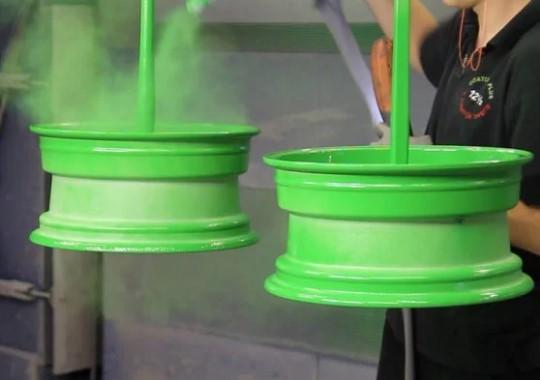
Now, look at professional pricing. Coating a set of brackets might cost $20. A set of wheels might cost $200. You would need to coat dozens of items just to break even on your equipment cost. Professionals charge based on labor wages ($50-$150 per hour) and material usage. Because they buy powder in bulk and run large efficient ovens, their "per-unit" cost is drastically lower than yours. When you pay a professional, you are also paying for their efficiency. They can blast, prep, coat, and cure a part in a fraction of the time it would take you to set up your garage.
The Hidden "Cost" of Quality and Risk
Beyond the financial spreadsheet, there is the cost of failure. Powder coating is chemically complex. If you don't clean the part perfectly, the powder won't stick. If you under-cure it, it will chip. If you over-cure it, it will become brittle and discolor.
- Surface Prep: Professionals use industrial chemical strippers and high-pressure media blasters. DIYers often rely on wire brushes and sandpaper, which rarely get deep enough into the pores of the metal.
- The Finish: A professional booth has airflow management to keep dust out of the finish. A garage setup often results in "trash" (dust, bug parts, hair) getting baked into the coating, ruining the smooth look.
- Safety Risks: Storing combustible powders and operating homemade heating elements in a garage poses fire and health risks that professional shops are insured and designed to handle.
When Does DIY Make Sense?
DIY powder coating only makes sense if it is the hobby itself that you enjoy. If you want to learn the science of electrostatics and have fun experimenting with colors on small parts, the cost is justified as entertainment. However, if your goal is simply to get a bed frame or a set of car rims colored, the DIY route is the most expensive and frustrating path you can take.
Conclusion
Trusting an applicator with the job is not only cheaper but smarter. Minimizing the powder coating cost is best achieved not by doing it yourself, but by doing your research, stripping parts yourself if you have the means, or finding a shop like Rusty Lions that offers competitive rates. In the battle of DIY vs. Pro, the professional route wins on quality, safety, and surprisingly, on price.

 English
 Arabic
 French
 Spanish
 Portuguese
 Deutsch
 Turkish
 Dutch
Dutch
 Italiano
 Russian
 Romaian
 Greek
Greek