


Why Does Aluminum Mig Wire Sometimes Feed So Inconsistently
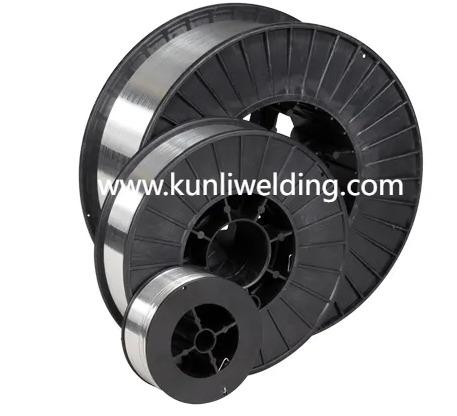
Welding operators occasionally encounter frustrating situations where wire feeds erratically despite properly adjusted equipment and clean contact tips. The circular pattern wire naturally assumes when unwound from spools, along with its tendency to form helical curves, affects how smoothly consumables travel through delivery systems. Aluminum MIG Wire Manufacturers control these geometric characteristics during production, though understanding how cast and helix influence feeding behavior helps welders recognize problems and implement corrective measures that restore consistent material delivery.
Cast refers to the diameter of the circular pattern wire forms when released from a spool without external constraints. Wire with tight cast springs into small diameter circles while loose cast material forms larger curves when unwound. This geometric property directly affects how wire navigates through cable liners, contact tips, and gun components during feeding operations. Excessively tight cast creates friction as wire constantly pushes against liner walls while traversing curves in the cable assembly.
Manufacturing processes influence cast characteristics through die design, drawing speeds, and spooling tension during production. Wire wound onto spools under high tension develops tighter cast that persists throughout its service life. Manufacturers balancing various performance factors must consider how production parameters affect not just chemical composition and mechanical properties but also geometric characteristics influencing feeding reliability.
Helix describes the three dimensional spiral pattern some wire exhibits rather than forming simple flat circles. This corkscrew geometry compounds feeding challenges since the wire twists as it travels through delivery systems, creating additional friction and erratic feeding behavior. Helix typically results from uneven tension during manufacturing or improper spooling practices that introduce torsional stress into the wire structure.
Feeding system design accommodates certain amounts of cast and helix through appropriately sized liners and contact tips, though excessive values exceed equipment tolerances. Standard cable assemblies include sufficient clearance for normal geometric variations, allowing smooth wire passage without binding. When cast or helix exceeds design parameters, friction increases dramatically, leading to inconsistent wire speed, bird nesting at drive rolls, or complete feeding failures during welding operations.
Drive roll pressure settings interact with wire geometry since operators sometimes increase pressure attempting to overcome feeding resistance from excessive cast. While higher pressure may temporarily force wire through the system, it often causes surface deformation that generates additional problems downstream. Proper drive roll adjustment provides adequate grip without crushing or deforming wire, allowing geometric characteristics rather than excessive force to guide feeding behavior.
Cable length and routing affect how cast and helix impact feeding reliability. Longer cable assemblies with multiple curves amplify problems from poor wire geometry since friction accumulates over extended travel distances. Minimizing cable length and avoiding sharp bends reduces sensitivity to cast and helix issues, though proper wire geometry remains important even in optimized cable configurations.
Liner condition influences whether given cast and helix values cause feeding problems. Worn liners with enlarged internal diameters allow wire to wander and bind within the cable assembly, particularly when wire geometry deviates from ideal specifications. Regular liner replacement maintains proper wire guidance that accommodates reasonable geometric variations without feeding disruptions.
Contact tip wear creates additional friction points where wire geometry affects feeding consistency. Tips enlarged through arc erosion allow wire movement that disrupts electrical contact and arc stability. Combining worn tips with poor wire geometry creates compounding problems that severely compromise welding performance.
Troubleshooting feeding issues requires systematic evaluation distinguishing wire geometry problems from equipment malfunctions or improper settings. Observing wire behavior as it exits the contact tip reveals whether geometric factors contribute to difficulties. Wire emerging with pronounced curves or twisting motion indicates cast or helix values potentially causing feeding problems.
Testing wire from different spools helps determine whether issues stem from specific material batches or equipment conditions. If problems persist across multiple wire sources, equipment factors likely dominate. When only certain spools exhibit feeding difficulties, wire geometry may exceed acceptable ranges, suggesting supplier quality control discussions or alternative material sources.
Storage conditions can worsen existing cast and helix problems since temperature cycling and physical damage during handling may alter wire geometry. Spools stored under heavy loads or in unstable orientations sometimes develop increased cast or helix through mechanical deformation. Proper storage practices preserve wire geometry throughout inventory lifecycles.
Measurement techniques for quantifying cast and helix exist though most fabrication facilities lack equipment for precise geometric assessment. Practical field evaluation involves unwinding wire sections and observing the resulting patterns. Tight circles indicating excessive cast or obvious helical spiraling suggest geometry outside normal ranges potentially causing feeding difficulties.
Economic implications of poor wire geometry extend beyond immediate feeding frustrations to include wasted materials, lost productivity, and potential equipment damage. Bird nesting episodes waste wire that must be cut away and discarded. Feeding interruptions reduce arc on time while operators clear jams and restart operations. Excessive friction from poor geometry accelerates liner and contact tip wear, increasing consumable replacement costs.
Supplier quality specifications should address cast and helix parameters alongside chemical composition and mechanical properties. Procurement discussions establishing geometric requirements ensure suppliers understand expectations and implement appropriate manufacturing controls. Quality agreements documenting acceptable ranges provide recourse when supplied materials exceed specifications. Fabricators experiencing persistent feeding challenges related to wire geometry can benefit from technical consultations addressing equipment optimization and material quality standards. Comprehensive resources supporting Aluminum Mig Wire feeding reliability and troubleshooting guidance are available at https://kunliwelding.psce.pw/8p6qbl . Understanding how geometric characteristics affect welding operations enables informed discussions with suppliers and systematic approaches to resolving feeding problems that compromise productivity and weld quality.

 English
 Arabic
 French
 Spanish
 Portuguese
 Deutsch
 Dutch
Dutch
 Italiano
 Russian
 Romaian
 Portuguese (Brazil)
 Greek
Greek