


Flexible Intermediate Bulk Container Market Report: Trends Shaping Industrial Packaging Flexible Intermediate Bulk Container Market: Strategic Overview and Business Opportunities
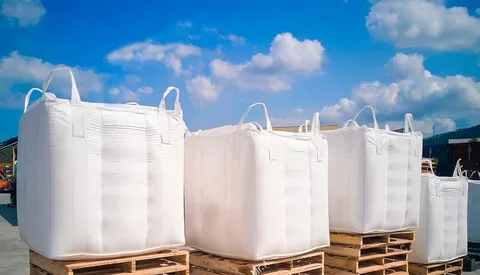
Bulk logistics systems are continuously evolving to handle larger volumes of materials with greater efficiency and safety. Industries such as agriculture, mining, food processing, and chemicals rely heavily on bulk packaging solutions that can transport heavy loads without compromising product integrity. As production output rises and cross-border trade expands, businesses increasingly seek cost-effective packaging that balances strength with operational convenience.
The Flexible Intermediate Bulk Container Market reflects these expanding logistical requirements. FIBCs are widely adopted because they offer high load-bearing capacity, ease of handling, and storage efficiency. Their collapsible design reduces return shipping costs and warehouse space usage, making them a practical solution for global supply chains.
Insights from Flexible Intermediate Bulk Container Market Growth indicate that industrial expansion in emerging economies is a key contributor to rising demand. Rapid agricultural production, fertilizer exports, and construction activities support increased use of bulk containers. Growth is also driven by the chemical industry, where safe handling of powders and granules is essential.
Technological improvements in weaving and material composition further accelerate adoption. Enhanced fabric strength and reinforced stitching improve durability, enabling containers to handle heavier loads safely. These advancements reduce product loss during transportation and enhance overall operational efficiency.
Sustainability considerations also support market expansion. Reusable FIBCs reduce reliance on single-use packaging and align with environmental regulations. Manufacturers are increasingly incorporating recyclable polypropylene materials to improve ecological performance.
Economic efficiency remains a primary growth factor. Compared with rigid bulk containers, FIBCs offer lower production and transportation costs. This affordability appeals to industries operating under tight margins.
Overall, sustained industrialization and global trade flows are expected to drive steady growth in this segment. As companies prioritize efficiency, safety, and sustainability, flexible intermediate bulk containers are likely to remain essential to bulk logistics operations.

 English
 Arabic
 French
 Spanish
 Portuguese
 Deutsch
 Turkish
 Dutch
Dutch
 Italiano
 Russian
 Romaian
 Portuguese (Brazil)