


Filtration Drying Equipment Market: Strategic Overview and Business Opportunities
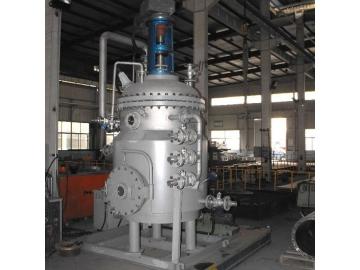
Filtration drying systems occupy a critical position in industrial manufacturing where precise separation of solids from liquids and controlled moisture removal are essential. These systems are widely used in pharmaceuticals, chemicals, food processing, and specialty materials to ensure consistent product quality, improve safety, and reduce process complexity. By combining two vital steps into one integrated unit, manufacturers can streamline operations, reduce handling, and improve overall efficiency.
According to a recent report by Market Research Future, the Filtration Drying Equipment Market is driven by rising quality standards, stricter regulatory oversight, and the need for higher productivity in regulated and performance-focused industries. The pharmaceutical sector, in particular, relies heavily on such equipment to maintain product purity and meet documentation and validation requirements. Integrated systems help minimize contamination risks by limiting material transfers and open handling steps.
A focused Filtration Drying Equipment Market Analysis shows that technological capability is becoming a primary differentiator among suppliers. Advances in filter media, vessel design, and thermal management improve separation efficiency and reduce drying times. At the same time, modern control systems allow precise regulation of temperature, pressure, and vacuum levels, enabling consistent results across batches.
Process safety and containment are also shaping purchasing decisions. In chemical and pharmaceutical plants, many products are potent, toxic, or sensitive to contamination. Equipment that supports closed processing, automated discharge, and robust sealing reduces operator exposure and supports compliance with occupational safety and environmental regulations. These features are increasingly viewed as standard rather than optional.
Operational efficiency remains a core value proposition. Integrated filtration drying systems reduce footprint, simplify cleaning, and shorten changeover times. For multi-product facilities, this flexibility translates into higher utilization rates and lower downtime. Energy consumption is another key factor, as drying steps are often among the most energy-intensive in a process. Improved heat transfer designs and optimized airflow help lower operating costs while maintaining performance.
From a market perspective, replacement demand is becoming as important as new installations. Many facilities are upgrading older equipment to meet modern compliance and efficiency standards. This trend supports steady demand even in mature manufacturing regions, where new plant construction may be limited but modernization remains ongoing.
Supply chain reliability and service support further influence buying decisions. Given the critical role of these systems in production, customers prioritize suppliers that offer strong commissioning, maintenance, and spare parts support. Long-term service agreements and remote monitoring capabilities are increasingly part of the value proposition.
In summary, the analytical view highlights a market driven by performance requirements, regulatory compliance, and efficiency goals. As industries continue to push for higher standards in quality and safety, filtration drying equipment will remain a central element of modern processing strategies.

 English
 Arabic
 Spanish
 Portuguese
 Deutsch
 Turkish
 Dutch
Dutch
 Italiano
 Russian
 Romaian
 Portuguese (Brazil)
 Greek
Greek