


Toxic Valley: The Beauty of a Wasteland That Refuses to Die
There is a region in northern Appalachia where the water has turned to acid and the trees stand like white bones against a jaundiced sky. Toxic Valley is not beautiful in the conventional sense. It smells of sulfur and regret. The air shimmers with chemical heat, and the only vegetation is the brittle reeds that somehow still manage to push through the poisoned soil. Yet it is here, in this chemical burn scar, that Fallout 76 Bottle Caps reveals its deepest truth: beauty does not require purity.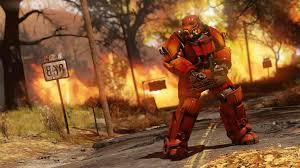
The story of Toxic Valley is written in its geography. The Grafton Dam, once a monument to civic engineering, now leaks its contaminated reservoir into the surrounding towns. The lake itself has become a dead sea, its surface unnervingly still, its shores littered with the skeletons of fish and tourists alike. Grafton, the region’s namesake, is a ghost town twice over—first abandoned during the resource wars, then irradiated beyond reclamation. The Grafton Monster, a lumbering cryptid born from the sludge, patrols the streets like a guardian of the ruin. It does not belong here. But then, neither do you.
What makes Toxic Valley compelling is not its devastation but its persistence. Life, however mutated, finds a foothold. Bloodbugs hatch in the stagnant pools. Snallygasters root through the garbage heaps. Even the settlers, wary of the region’s reputation, occasionally venture north to scavenge the abandoned factories. The valley is dying, has been dying for over a century, but it refuses to complete the process. There is a stubbornness here that feels distinctly Appalachian.
This stubbornness extends to the human remnants scattered throughout the zone. The Responders attempted to establish a forward operating base in Grafton; their failure is preserved in frozen terminals and unanswered radio calls. The Free States, those pre-war survivalists who saw the apocalypse coming, left behind bunkers stocked with canned beans and hollow manifestos. They all believed preparation was enough. The valley proved otherwise.
Yet the valley also proves something else: that abandonment is not erasure. Players pass through Toxic Valley on their way to higher levels and greener pastures. They complete the event at Grafton Dam, collect their rewards, and fast travel elsewhere. But the valley remains. It waits. Its poisoned beauty does not demand attention, but it accepts it when offered.
I often return to Toxic Valley when the endgame grind becomes exhausting. I walk the empty streets of Grafton. I watch the monster circle the courthouse. I stand at the edge of the lake and listen to the chemical lap of water that will never be clean again. There is no quest here. No reward. Only the landscape, and the quiet acknowledgment that some places do not need to be saved to be worthy of our attention. They only need to endure.

 English
 French
 Spanish
 Portuguese
 Deutsch
 Turkish
 Dutch
Dutch
 Italiano
 Russian
 Romaian
 Portuguese (Brazil)
 Greek
Greek