


How Sweetrich Supports Smooth Urban Transitions
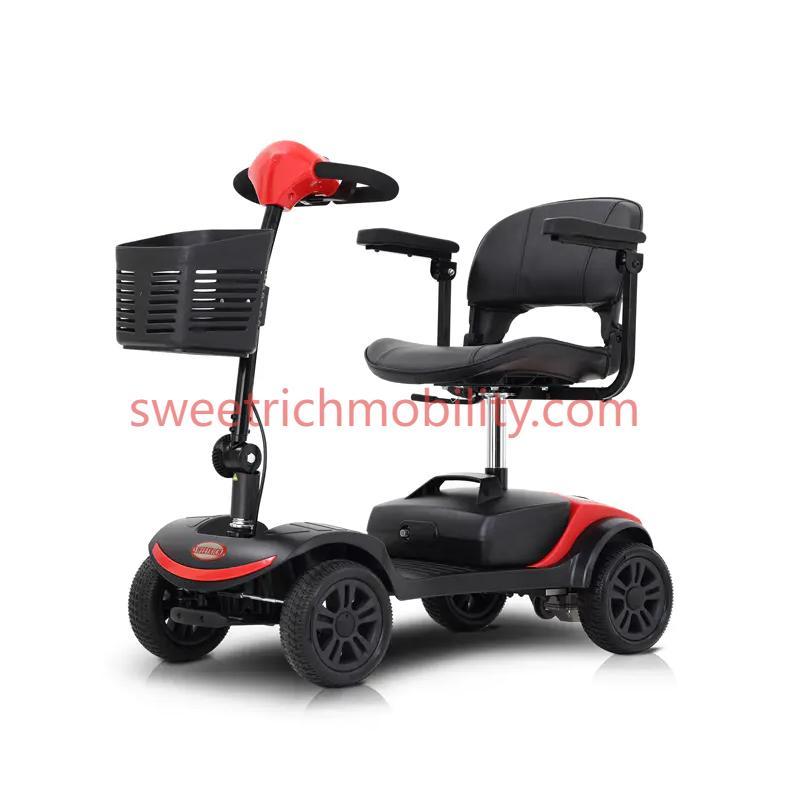
Urban mobility continues to reshape daily movement patterns, especially where shared services and compact transport solutions intersect. In the middle of this transformation, the idea behind a Foldable Scooter Factory reflects more than production—it represents adaptability, responsibility, and thoughtful urban integration. As cities grow denser, mobility tools must support flexible travel while fitting smoothly into public environments without disruption.
Portability has become one of the most valued qualities in modern urban transport. A foldable design allows riders to transition easily between outdoor routes and indoor spaces such as transit halls, offices, or residential buildings. When a scooter can be carried, stored, or positioned discreetly, it supports freedom of movement rather than limiting it. This sense of flexibility aligns well with shared systems, where equipment must adapt quickly to changing user needs throughout the day.
Compliance plays an equally important role in sustainable city travel. Urban environments rely on order, predictability, and mutual respect among all road and pathway users. Foldable scooters designed with compliance in mind help ensure compatibility with public spaces, pedestrian zones, and shared corridors. Thoughtful structural balance, controlled speed behavior, and intuitive handling allow riders to move confidently without disturbing others nearby.
Shared mobility services depend heavily on equipment that is easy to manage, reposition, and maintain. Foldable scooters simplify logistics for shared fleets because they occupy minimal space when not in use. This efficiency supports smoother operations in urban hubs, transport nodes, and community centers. When storage and redistribution become easier, service availability improves without adding clutter to city infrastructure.
Scenario adaptability defines whether a mobility solution truly belongs in a modern city. Urban travel is rarely limited to one surface or environment. Riders move between sidewalks, crossings, indoor passages, and open plazas within a single journey. A foldable scooter supports these transitions by adjusting effortlessly to different surroundings. This versatility makes it suitable for commuters, visitors, and shared users alike.
From a service perspective, reliability and user confidence are essential. Foldable scooters designed for shared urban use must feel intuitive from the first interaction. Clear structure, predictable handling, and comfortable posture help users of varying experience levels feel at ease. When riders feel confident, shared services become more attractive and widely adopted across communities.
Another important aspect of urban integration is coexistence. Cities function best when transport solutions blend into everyday life rather than dominate it. Foldable scooters encourage this balance by reducing visual and physical presence when stationary. They can be placed alongside walls, under counters, or within designated areas without obstructing movement. This quality supports harmonious interaction between riders and pedestrians.
Environmental awareness increasingly influences mobility decisions. Foldable scooters contribute indirectly by encouraging short-distance travel without reliance on larger transport methods. Their lightweight nature supports efficient movement across compact routes, helping reduce congestion in busy areas. In shared systems, this efficiency multiplies as more users rely on compact solutions for routine travel.
A modern Foldable Scooter Factory does not merely focus on assembly; it reflects a mindset centered on urban responsibility. Design choices consider how scooters behave in real-life city settings, how they interact with people, and how they support shared access rather than exclusivity. This perspective strengthens trust among operators, users, and city planners.
Urban mobility continues to evolve through cooperation between design, regulation, and everyday behavior. Foldable scooters, when developed with portability, compliance, and scenario suitability in mind, align naturally with shared services and city transport ecosystems. They support flexible travel while respecting public space and operational efficiency.
As cities seek balanced mobility options that serve both individuals and communities, foldable scooters remain a practical response to changing urban demands. Their ability to move seamlessly between roles—personal transport, shared asset, or stored companion—makes them an essential part of contemporary urban travel systems.https://www.sweetrichmobility.com/product .

 English
 Arabic
 French
 Spanish
 Portuguese
 Deutsch
 Turkish
 Dutch
Dutch
 Russian
 Romaian
 Portuguese (Brazil)
 Greek
Greek