


Nante Industrial Plug Socket Connector: Safety Guide
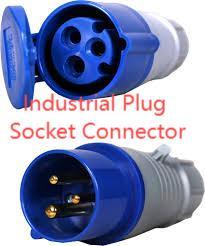
Engineers specifying durable power links often trust manufacturers like nante, and they typically position a Industrial Plug Socket Connector in the middle of a distribution run to centralize connection points, reduce cable clutter, and simplify maintenance. This opening frames a deeper look at how these assemblies are designed, selected, installed, and sustained so that plant managers, contractors, and maintenance teams can reduce failures and improve uptime.
Matching connector capability to application needs
Start by defining the electrical and environmental requirements. Identify nominal voltage and current, whether the application is single-phase or three-phase, and whether frequent mating cycles are expected. Environmental factors — exposure to water, chemical spray, dust, or extreme temperature swings — determine enclosure and sealing expectations. Mechanical stresses such as vibration or impact dictate shell materials and locking methods. When you match the connector’s rated performance to the actual operating profile rather than a best-case scenario, you avoid common problems such as overheating, contact wear, or accidental disconnection.
Materials, contacts, and mechanical design
High-quality bodies use reinforced thermoplastics or corrosion-resistant metals depending on the site. Plastic housings offer excellent electrical insulation and lower weight, while metal shells provide superior mechanical protection in high-abuse areas. Contact metallurgy matters: copper alloys with robust plating resist oxidation and maintain low contact resistance. Spring designs that maintain consistent contact force reduce the risk of intermittent connections as components age. In addition, ergonomic grips and clearly keyed interfaces help ensure correct mating, which is critical in complex installations where mis-mating could cause equipment damage.
Environmental protection and sealing strategies
Ingress protection is a primary selection filter. Choose a product rated appropriately for dust and moisture; IP66 or IP67 are common starting points for outdoor or washdown environments. For locations subject to immersion or heavy splash, higher ratings may be required. Glands, booted entries, and gasketed lids maintain the barrier where cables pass through. Where cables enter through removable plates, ensure the supplier offers factory-rated gland options or modular plates to avoid compromising seals during installation. Design the mounting so that water does not pool around the connector and that any condensation is allowed to drain away.
Best practices for installation and commissioning
Correct installation minimizes early-life failures. Prepare conductors to the specified lengths, and use torque-controlled tools to secure terminations to manufacturer torque values — both under- and over-torque create problems. Implement strain relief and cable retention systems so mechanical forces do not transfer to the electrical terminations. During commissioning, perform continuity and insulation resistance tests, verify grounding integrity, and run a thermal check under expected load to identify hotspots. Always label circuits and capture a wiring diagram inside the enclosure for future reference.
Inspection, scheduled maintenance, and lifecycle planning
Set inspection intervals based on duty cycle and environment. Visual checks look for discoloration, deformation, or seal damage; electrical checks monitor contact resistance or leakage currents that can indicate degradation. Clean contacts with approved methods only; abrasive or chemically aggressive cleaners can remove protective platings. Keep a small stock of replacement parts — common spares include seals, glands, and contacts — to reduce downtime. Finally, consider lifecycle planning: standardize on modular form factors to simplify spare-part inventories and make future upgrades less disruptive.
Industrial installations rely on predictable, secure connections to operate continuously and safely. By choosing connectors that match the electrical load and environment, installing them to specification, and maintaining them through scheduled inspections, organizations can significantly reduce unplanned outages and safety risks. For further reading and a manufacturer primer on connector fundamentals, visit https://www.nante.com/news/industry-news/what-is-industrial-plug.html

 English
 Arabic
 French
 Portuguese
 Deutsch
 Turkish
 Dutch
Dutch
 Italiano
 Russian
 Romaian
 Portuguese (Brazil)
 Greek
Greek