


Guanghe Parchment Paper: Precision Baking Made Simple
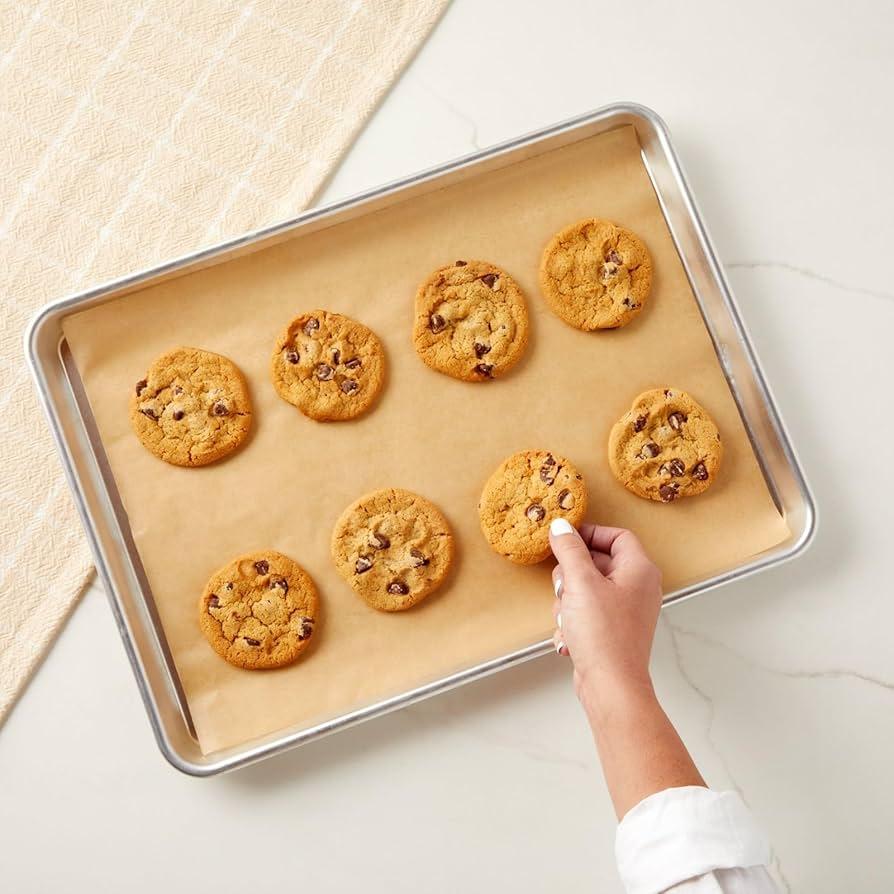
In professional kitchens and home baking alike, Parchment Paper has become an essential tool that combines convenience with technical functionality, ensuring even heat distribution, non-stick reliability, and hygienic preparation. Modern baking practices demand materials that not only prevent sticking but also support precise thermal management, making high-quality baking paper a critical component in achieving consistent results.
Material Composition and Mechanical Strength
Baking paper begins with carefully sourced cellulose fibers, refined to produce sheets that balance flexibility and tensile strength. The fiber network determines how well the paper resists tearing during handling and how it maintains shape under the stress of heavy dough or repetitive use. Thickness uniformity across the sheet ensures consistent heat conduction, preventing localized overbaking or undercooked areas.
Manufacturers like Zhejiang Guanghe New Materials Co., Ltd. implement advanced pulp refining techniques to optimize fiber bonding and sheet density. By controlling water content during drying, the company achieves a stable base that resists warping or curling when exposed to high oven temperatures.
Silicone Coating for Non-Stick and Heat Resistance
The hallmark of effective baking paper is its non-stick surface, typically achieved through a food-grade silicone coating. The coating must be evenly applied and properly cured to withstand thermal stress while providing effortless release. An optimized silicone layer prevents sticking, reduces the need for additional fats or oils, and supports healthier baking practices.
Precision in coating weight and curing is crucial. Excessive thickness may impede airflow and moisture release, while inadequate coverage can compromise performance. Zhejiang Guanghe emphasizes uniform coating procedures and quality checks to ensure consistent release properties across all production batches.
Heat Performance and Dimensional Stability
Baking often involves high-temperature conditions ranging from 160°C to over 230°C. Parchment paper must maintain flatness and mechanical strength under these conditions. Properly engineered sheets resist discoloration, brittleness, and edge curling, ensuring that baked items retain their intended shape and texture.
The paper’s porosity is balanced to allow steam release while retaining structural support. This characteristic is vital for pastries, cookies, and bread that require controlled moisture retention to achieve optimal texture and surface browning.
Practical Techniques for Professional Use
Using baking paper effectively requires understanding its handling characteristics. For deep or irregularly shaped pans, pre-cut sheets conform to tray dimensions to minimize air pockets. Lightly folding edges along corners enhances fit and stability during baking.
For sticky batters, securing the sheet with minimal batter or a dab of oil helps prevent shifting. In large-scale bakeries, roll-fed sheets or pre-cut formats facilitate rapid lining of trays, improving workflow efficiency. Proper alignment also ensures even heat exposure, critical for consistent browning and texture.
When layering cakes or separating frozen dough portions, parchment paper acts as a protective barrier, preserving structural integrity and simplifying removal. Its versatility supports diverse baking techniques and recipes, from delicate meringues to hearty laminated doughs.
Expanded Culinary and Industrial Applications
Beyond traditional baking, parchment paper is useful in roasting, steaming, and en papillote cooking, where it enables precise moisture control while preventing sticking. Confectionery production also relies on its smooth, grease-resistant surface for chocolate tempering, caramel cooling, and sugar artistry.
In industrial settings, baking paper supports automated production lines, providing consistent spacing and release properties. Its heat resistance and strength make it suitable for repeated handling, cutting, and shaping in food manufacturing processes.
Quality Assurance and Compliance
Reliable performance requires rigorous quality management. Baking paper is tested for tensile strength, heat resistance, grease permeability, and food-contact safety. Batch-to-batch consistency ensures predictable results in both commercial and home applications.
Zhejiang Guanghe New Materials Co., Ltd. implements multi-step quality inspections, including monitoring fiber uniformity, coating adherence, and dimensional accuracy. These practices guarantee that each sheet meets global food safety standards and provides consistent functional performance for diverse applications.
Sustainable Production Practices
Sustainability in manufacturing is increasingly important. Efficient energy use, optimized water recycling, and responsible sourcing of cellulose fibers reduce environmental impact. Advances in coating technology allow for thinner, more effective layers without sacrificing performance, balancing functionality with eco-conscious production.
Through continuous improvement and technological innovation, Zhejiang Guanghe integrates high performance with sustainability, offering products that meet the needs of modern food production while minimizing environmental footprint.For detailed product information, technical specifications, and purchasing options for high-quality parchment paper, visit Zhejiang Guanghe New Materials Co., Ltd. at: https://www.guanghepaper.com/product .

 Arabic
 French
 Spanish
 Portuguese
 Deutsch
 Turkish
 Dutch
Dutch
 Italiano
 Russian
 Romaian
 Portuguese (Brazil)
 Greek
Greek