


Strategic Efficiency in Advanced Composites: Evaluating the Mold Release Coating Market Share
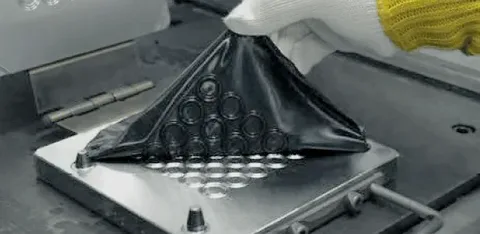
The global automotive and construction sectors of early 2026 are operating under a mandate for extreme material efficiency and "residue-free" part production. Central to this transition is the strategic utilization of high-performance mold release coatings, which act as a vital barrier between the forming part and the mold cavity. Unlike traditional paste waxes, modern semi-permanent coatings provide a consistent, high-gloss finish that eliminates the need for secondary post-molding processes like sanding or buffing. This shift toward "net-shape" manufacturing is particularly evident in the electronics and medical device industries, where maintaining microscopic tolerances and preventing chemical contamination is a critical factor for functional performance and safety.
According to a recent report by Market Research Future, the Mold Release Coating Market is benefiting from a strategic focus on multi-functional chemical design. This trend is a key pillar of recent Mold Release Coating Market Share analysis, which reveals that the Polyurethane application segment currently remains a dominant revenue driver, accounting for a significant portion of the global demand. However, the Composite Materials segment is anticipated to witness the most rapid expansion, as the global push for "lightweighting" in electric vehicles necessitates the mass production of complex resin-infused parts. Key industry players, including Henkel AG & Co. KGaA, Chem-Trend L.P., and Wacker Chemie AG, are increasingly focusing on Fluoropolymer-Based Formulations to ensure high slip and chemical inertness across diverse molding environments.
As we look toward the mid-2030s, the focus is shifting toward "Self-Cleaning Tooling Systems" and the expansion of the autonomous fabrication niche. We are seeing early-stage development of "smart release agents" that can change their surface energy in response to thermal triggers, ensuring an effortless part ejection even for the most complex geometries. Furthermore, the move toward "Bio-Sourced Release Intermediates"—which replace petroleum-derived silanes with plant-based alternatives—is helping the chemical industry align with global 2030 carbon-neutrality targets. By 2035, the market will be a foundational pillar of Production Longevity, providing the essential, high-efficacy, and ecologically neutral interfaces required to protect and empower global populations in a world of increasingly sophisticated industrial hardware.

 English
 Arabic
 French
 Spanish
 Portuguese
 Turkish
 Dutch
Dutch
 Italiano
 Russian
 Romaian
 Portuguese (Brazil)
 Greek
Greek